Why the template is copied and never installed
The most common objection to the product: why not an npm package that updates with one command. The answer runs longer than 'it is simpler this way'.
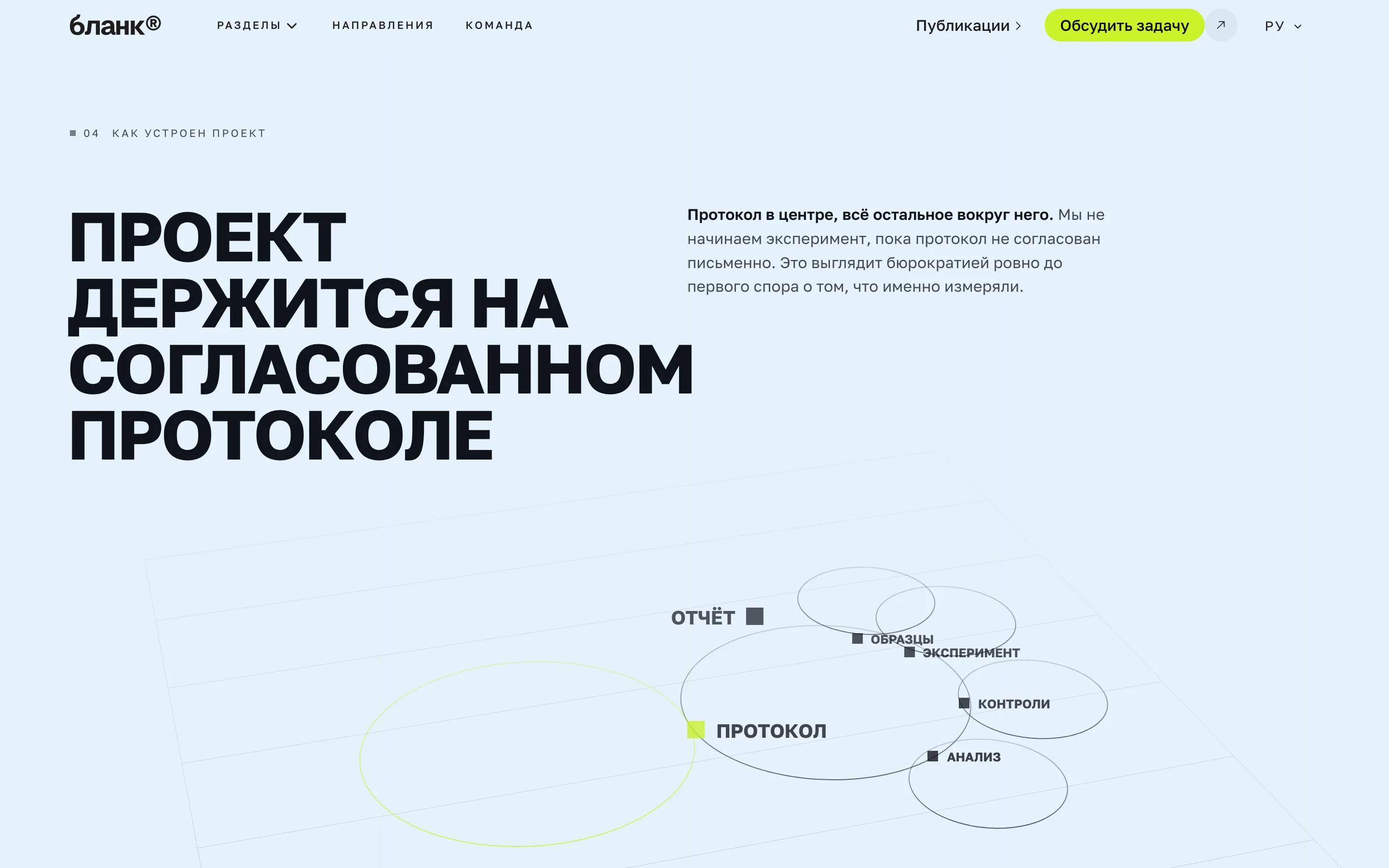
A Sitify build starts by copying a folder. Not by installing a dependency, not by a generator that pulls the current version from a registry — by an ordinary rsync. From then on that copy lives its own life and has no link back to the template.
To an engineer that looks like a step back of about fifteen years. Here is why, for a marketing site, it is a step sideways rather than back.
What a dependency buys
One update reaching every project at once. That is a real advantage, and it pays for itself where the projects are alive: opened weekly, covered by tests, with a breakage noticed within the hour.
A marketing site is not that. It was built, handed over, and not opened for six months. It has no tests and will not get any — verification here is visual. And nobody is positioned to notice that a minor update moved a section three hundred pixels: the client does not look at their own site, and if they do, they write a week later.
What a copy buys
The site does not change until somebody changes it. That is the only property, and nearly everything else follows from it.
A fix moves from one project to another through a person who looked at both. Two sites from one template diverge, and that is the design: one has four languages and a blog, the other one page and a form, and a shared ancestor is useful to them as a starting point, not as an owner.
A buyer gets files rather than access. No subscription has to be renewed for their site to keep building, and no permission has to be asked to rewrite a section.
What it costs
A fix does not propagate on its own. Find a defect in the template and it has to be carried by hand into every site that has it. That is work, and the product does not pretend otherwise: it ships a separate mode — the doctor — which reads which version a site was built from, walks every changelog entry newer than that, applies them one at a time and reports on each.
The first rule of that mode is the first line of its manual: never copy the template over a live site. Copying is not an upgrade, it is a deletion with extra steps.
So the choice is not between updating and not updating. It is between an update that happens by itself at 3am and an update somebody performed and answers for.
More from the blog
Two, never more. A longer strip turns the end of an article into a second index page, and the reader has already chosen once.